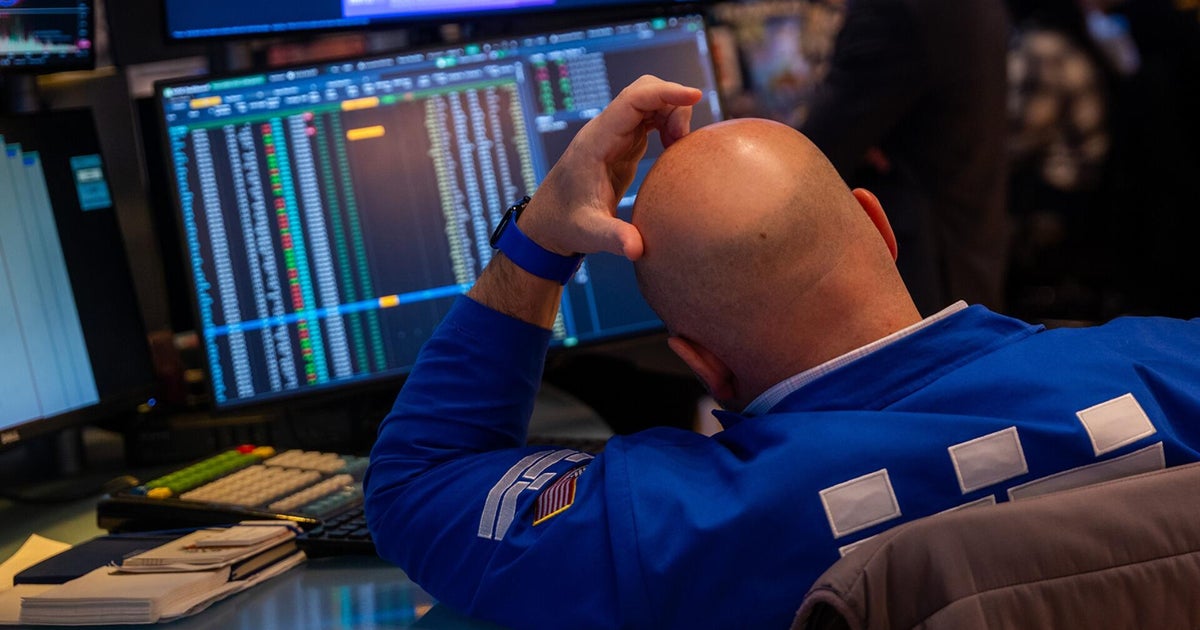
President Trump threatened a "tremendous tax" on U.S. tech companies building artificial-intelligence data centers outside the country, directly targeting the infrastructure buildout by Amazon, Microsoft, Google, and others. The threat came as markets closed out their worst week in over a year, with the Nasdaq and S&P 500 both entering correction territory.
Key points
Market impact. The announcement accelerated a broader tech selloff already underway. Nvidia plunged 12% for its longest weekly losing streak since the 2008 financial crisis, while the Nasdaq composite erased all 2026 gains. The threat directly pressures the capex plans of mega-cap cloud providers and chip suppliers who have been racing to build capacity abroad to manage costs and geopolitical risk.
Broader implications. Trump's move signals a protectionist pivot on AI infrastructure that could force a costly repatriation of data center investment to the U.S., raising operational costs for tech giants and potentially slowing AI deployment globally. The policy also reflects growing political pressure on Big Tech over AI spending and raises questions about the feasibility of his threatened tax mechanism.
Sources (3)CBS News, Business Insider, Market Watch
Nvidia's ousted CEO Jensen Huang operated a management style reportedly built on fear and intimidation, according to reporting on his departure. The exit compounds Nvidia's legal troubles, including an SEC probe into accounting practices and emerging reports that his wife faces accusations of chip smuggling tied to export controls.
Key points
Market impact. Nvidia's stock has become a barometer for AI sentiment and market health; its 12% weekly plunge dragged the entire semiconductor sector lower and contributed to the Nasdaq's worst week since 2020. The leadership vacuum and scandal cloud investor confidence in the company's governance at a moment when Nvidia's valuation and market influence are already under scrutiny.
Broader implications. Huang's departure signals potential fractures in Silicon Valley's AI leadership ranks and raises questions about the sustainability of the AI boom's human costs. Trump's public defense of Huang and suggestion he discuss the matter with Xi Jinping adds a geopolitical dimension to what appeared to be a domestic corporate governance issue.
Sources (3)YouTube - Yahoo Finance, TechCrunch, New York Post Business
Anthropic's debut on the Nasdaq Thursday raised $81 billion in what was initially heralded as a record-breaking IPO, but shares collapsed on the second day of trading as the broader AI sector unraveled. The stock's decline mirrored a wider loss of confidence in the capital intensity and profitability of AI infrastructure spending.
Key points
Market impact. Anthropic's stumble punctured the narrative of AI as a guaranteed growth engine and triggered a reassessment of valuations across the sector. The S&P 500 and Nasdaq both posted their worst weekly performance in over a year, with all 11 S&P 500 sectors finishing more than 1% lower for the first time since April 2025—a rare capitulation signal.
Broader implications. The IPO's immediate failure raises questions about whether Wall Street and Silicon Valley have priced AI companies at unsustainable valuations relative to near-term profitability. Anthropic's public commitment to safety-first operations now faces pressure from public market demands for returns, creating a structural conflict between stated mission and shareholder expectations.
Sources (3)New York Post Business, The Guardian Business, New York Times Business
The S&P 500 and Dow Jones both entered correction territory (down 10% from highs) while the Nasdaq composite posted its worst week since 2020, driven by a capitulation in mega-cap AI and technology stocks. All 11 S&P 500 sectors finished the week down more than 1%—a rare synchronized selloff not seen since April 2025.
Key points
Market impact. The breadth of the decline signals a loss of confidence in the market's leadership rather than a rotation. AI stocks, which have outsized influence on index performance due to their massive market capitalizations, were responsible for dragging the broader market lower. Prediction market odds for the S&P 500 reaching 8,000 have collapsed from above 70% to extremely low levels.
Broader implications. The selloff reflects mounting concerns about whether the AI boom can justify the capital being deployed and whether a hard landing in the economy is imminent. Bank of America strategists warn that Wall Street is underpricing hard-landing risks, suggesting further downside if recession fears intensify.
Sources (3)Market Watch, NPR Business, CBS Money Watch
Procter & Gamble announced plans to cut up to 30% of its manufacturing and logistics workforce by 2030 while targeting $10 billion in savings, even as it maintains its 70-year consecutive dividend increase streak. The restructuring reflects pressure to automate and streamline operations in a consumer goods sector facing margin compression.
Key points
Market impact. P&G's cost-cutting plan supports near-term dividend sustainability and earnings growth, providing a rare positive signal in a week of broad-based selloffs. The stock's resilience as a dividend aristocrat offers defensive appeal in a correcting market, though the scale of workforce reduction signals management's confidence in automation's ability to replace headcount.
Broader implications. P&G's restructuring exemplifies how even defensive, dividend-paying industrials are being forced to pursue aggressive automation and cost-cutting to maintain shareholder returns. The move raises questions about employment trends across consumer staples and manufacturing as companies prioritize capital efficiency over workforce stability.
Bitcoin fell below $60,000 for the first time since July, dropping nearly 6% as U.S. equities declined and the Nasdaq fell more than 2%. The crypto's decline tracked risk assets closely, undermining the narrative that Bitcoin functions as a hedge against equity volatility or a store of value independent of broader market sentiment.
Key points
Market impact. Bitcoin's correlation with equities during the selloff suggests that crypto remains a risk asset rather than a safe haven, pressuring valuations for crypto-exposed funds and traders who positioned for portfolio diversification. The move coincided with Anthropic's IPO stumble and broader AI sector weakness, indicating that speculative capital is rotating out of risk assets across categories.
Broader implications. Bitcoin's failure to hold its "digital gold" status during market stress raises questions about its utility as a macro hedge and its appeal to institutional investors seeking uncorrelated returns. The move suggests that in a genuine risk-off environment, liquidity and correlation dynamics override ideological narratives about crypto's independence from traditional markets.
President Trump, Chinese President Xi Jinping, and Russian President Vladimir Putin held a historic trilateral summit in China and issued a joint four-point peace declaration—a first for the three leaders. Trump characterized Putin as wanting to end the Ukraine war, though details on substantive outcomes remain sparse.
Key points
Market impact. The summit's geopolitical implications are significant but market reaction has been muted amid the broader tech selloff. Any credible path to Ukraine peace could ease energy and commodity volatility, though skepticism about the declaration's enforceability and Trump's characterization of Putin's intentions has limited risk-on positioning.
Broader implications. The summit signals a potential realignment in U.S.-China-Russia relations under Trump, with implications for sanctions regimes, trade policy, and geopolitical stability. The joint declaration's vagueness and lack of specifics on Ukraine suggest the summit was more symbolic than substantive, though it sets the stage for future negotiations on trade, technology, and military tensions.
Rockstar Games' Grand Theft Auto VI generated nearly $4 billion in first-day sales, shattering records and becoming the biggest entertainment launch ever—nearly five times the $800 million GTA 5 generated on its first day in 2013. The game achieved a Metacritic score of 99 and has already been nominated for Game of the Year.
Key points
Market impact. Despite the record-breaking sales, Take-Two Interactive's stock has failed to rally, instead declining amid the broader market selloff. The disconnect suggests investors are pricing in mature market saturation, longer-term monetization challenges, or simply treating the launch as priced-in news in a risk-off environment.
Broader implications. GTA 6's success validates the entertainment industry's shift toward fewer, larger blockbuster releases with extended monetization windows. However, the stock's indifference signals that even record-breaking consumer demand cannot offset broader market concerns about growth, valuations, and economic headwinds facing discretionary spending.
Sources (3)Market Watch, New York Post Business, BBC Business